
Planning a Pool in Raleigh? Start With These 7 Key Decisions
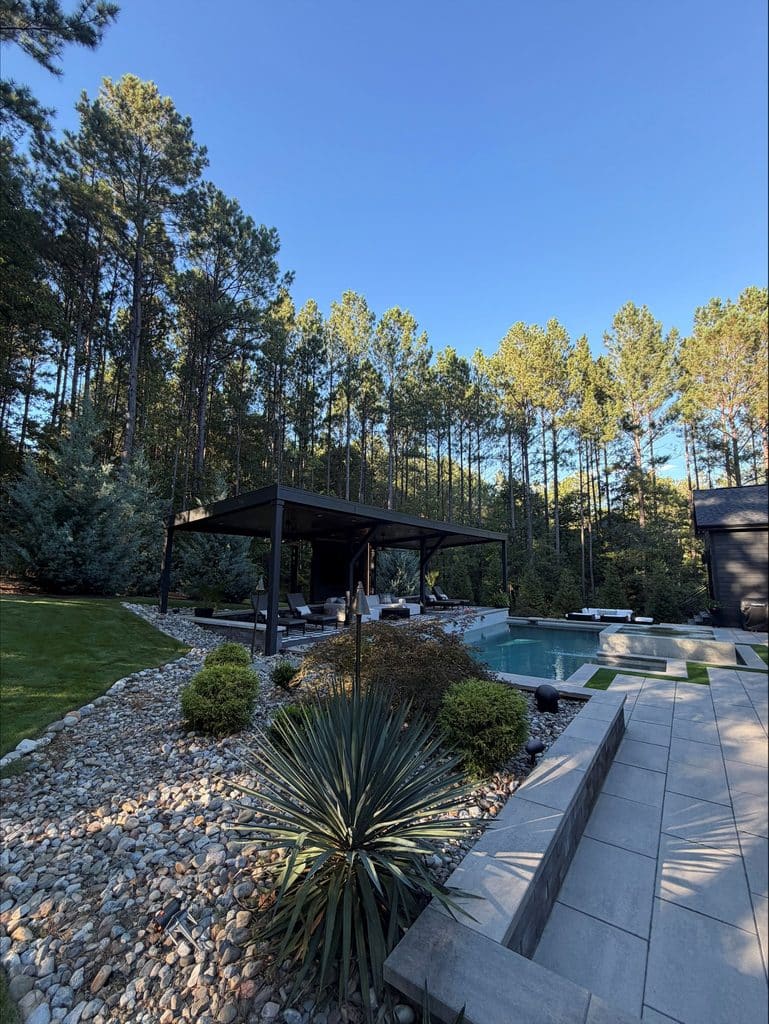
Planning a custom pool or backyard pool is a major home project. Raleigh homeowners should consider how they will use the water, where a pool could fit, which design suits the home, and what ongoing care may involve. This guide covers the key questions to discuss with a pool professional before choosing finishes or features.
Start with the way you will use the pool
Picture an ordinary week. Will people swim laps, play with children, cool off after work, or relax with friends? Activities call for different layouts. A longer swimming area may suit exercise, while a shallow entry, seating ledges, and steps can support casual use. Rank your priorities so the designer can guide trade-offs if space or budget is limited.
Think about who will use the space and how often. A pool for quiet family time may need a different deck arrangement than one for frequent entertaining. Consider where people will sit, dry off, and move between the house and water.
Understand the yard before choosing a shape
Every property has constraints. The home, trees, slopes, drainage, utilities, construction access, and gathering areas can all affect the usable space. A survey or plot plan helps the design team understand the property. Bring yard photos and note features to preserve, such as a tree, garden, patio, or play area.
Observe the yard at different times of day to note sunlight, shade, wind, and views. The largest open area is not always the best location. The pool should work with the home and landscape while leaving room to move around it. A professional can review practical placement options.
Choose a design that fits the home and routine
Shape affects appearance and function. Geometric designs can complement clean architectural lines and provide a defined swimming area; freeform curves can blend with natural landscaping. A vanishing edge, spa, or water feature may suit some sites. Weigh each option against the yard, intended use, care preferences, and budget.
Use examples for inspiration, then ask how each feature would work in your yard. How much deck area remains? Can people move around the pool? Will steps and seating suit the users? Good pool design balances appearance with everyday use.
Plan for safety and circulation
Discuss safety during planning. Consider how children, guests, and pets will approach the pool, and ask which barriers, gates, alarms, covers, or supervision practices suit your household. Requirements vary by location and project, so ask your contractor what applies and confirm with local authorities. No feature replaces active supervision.
Ask the builder to explain circulation in plain language. Swim Inc. describes its Swim-Safe® system as a drainless circulation system designed for each pool. Ask how it would be configured, what equipment it includes, and what routine care involves. This helps you compare options for your project.
Think beyond the construction price
The proposal is one part of ownership. Clarify what is included and which choices could change the price, including decking, landscaping, lighting, heating, cleaning equipment, and fencing. Ask how changes are approved and documented. A written scope helps you compare proposals on the same basis.
Ask about ongoing water care, electricity, cleaning, and seasonal use. Find out which pumps, filters, and circulation components are planned, how they are sized, and what care they require. If efficiency matters, ask what the proposed equipment is designed to do and what assumptions support any estimates. Also consider how the pool will be used during cooler months and whether heating or a cover belongs in the plan. A feature that is attractive on paper should fit the household’s routine and operating expectations. Ask for maintenance guidance before you finalize equipment choices, and make sure you know which tasks are routine and which require professional service.
Prepare for the planning conversation
Before contacting a builder, collect a survey or plot plan if available, yard photos, a list of must-have features, and design examples. Be ready to discuss how you will use the pool and what you want to preserve. You do not need every decision made; an initial meeting should clarify priorities and open questions.
When comparing professionals, ask about licensing and insurance, responsibilities, communication, milestones, and how changes are handled. Review what the proposal includes, excludes, and leaves undecided. A pool builder in Raleigh should be able to discuss the property, design choices, and project process clearly. Swim Inc. serves Raleigh and the Triangle and offers project consultations about pool construction.
Frequently asked questions
What should I decide before meeting a pool builder?
Start with intended use, the people who will use it, features to preserve, and your priorities. Yard photos and a plot plan can make the discussion more specific.
How do I choose a pool shape for my backyard?
Compare the home, yard area, activities, landscaping, and desired deck space. A designer can assess fit and explain trade-offs.
What should I ask about pool operating costs?
Ask what equipment is included, plus expected water care, cleaning, and electricity needs. Request the assumptions behind efficiency estimates and an explanation of the circulation and filtration setup.
Is the Swim-Safe® system right for every project?
Ask Swim Inc. how the system would be configured for your property and what it includes. A consultation can assess its fit with your goals and project requirements.
When should I contact a pool builder?
Contact a builder when you are ready to discuss feasibility. You can explore site questions before deciding on a shape or every feature.
Ready to explore a pool for your home? Swim Inc. can help Raleigh and Triangle homeowners discuss site conditions, priorities, and design ideas. Visit swimincnc.com/pool-design/ or contact the team to schedule a consultation.


